
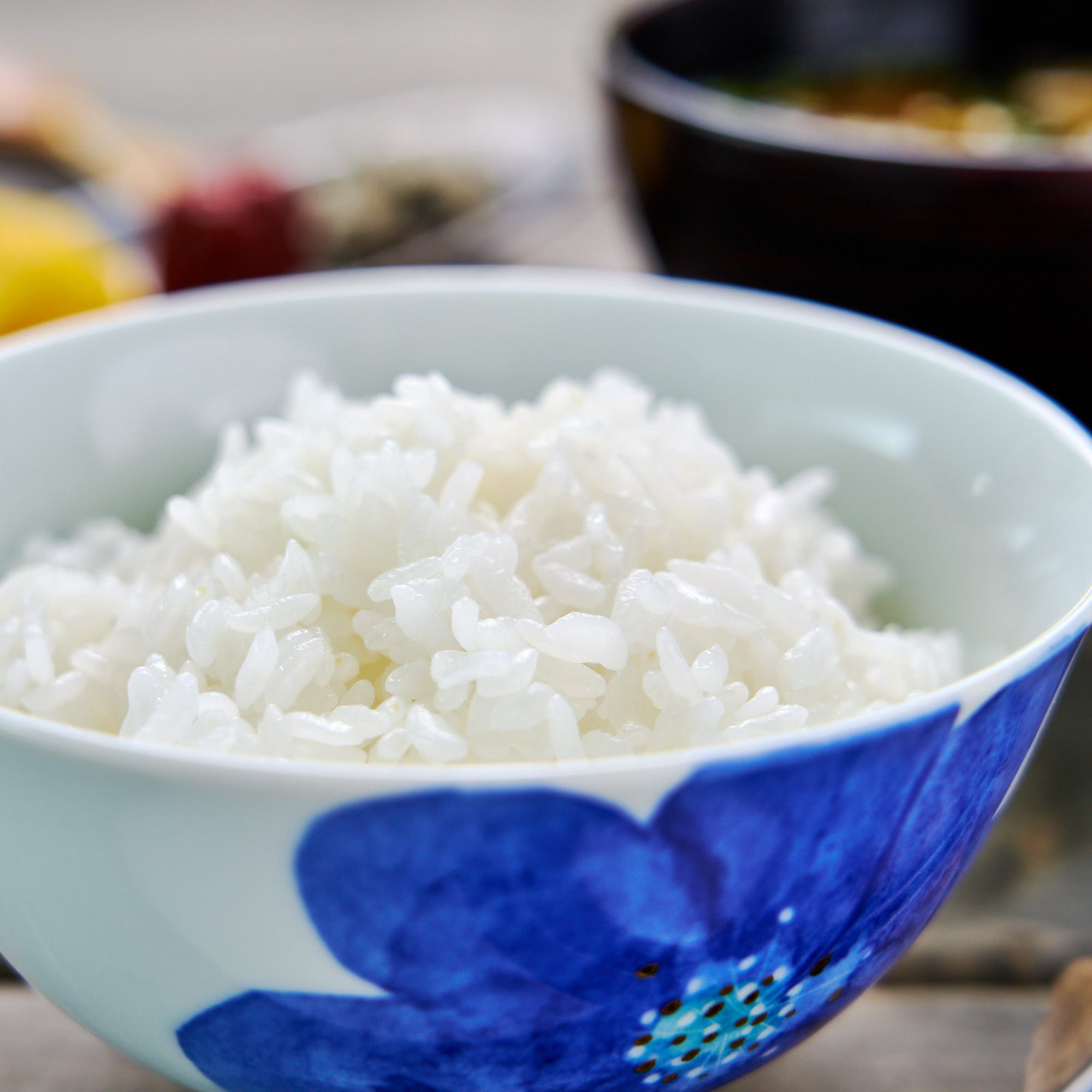
Every January, food goes from joyful holiday indulgence to self-improvement project. As we roll over into the new year, there are rules to follow, points to count, and things to avoid. It comes from a good place: we all want to eat better and feel better. But somewhere in all that effort, the simple pleasure of a satisfying meal gets lost, and the complexity adds stress we don’t need. I think there’s a gentler way, one that’s been working in Japanese kitchens for centuries.
Over the next few weeks, I’m going to explore how Japanese meals work and why they’re balanced, satisfying, and easy to integrate into your kitchen, no matter where you live. This isn’t a promise that eating a certain way will extend your life or transform your body. It’s a look at practical principles you can use and why structure matters more than willpower when it comes to reaching your goals.
The Framework
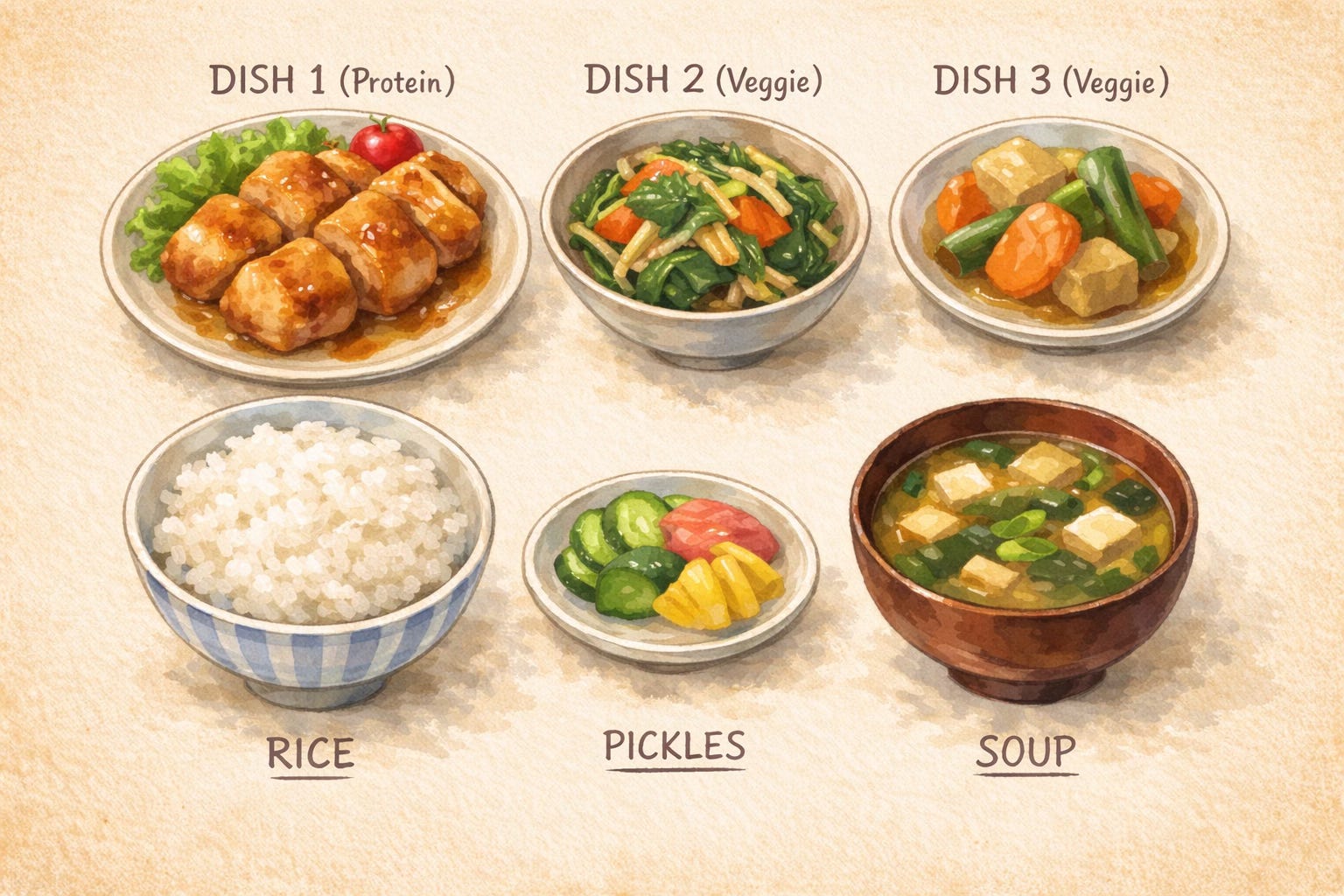
At its core, Japanese cuisine is built on a framework called ichijū-sansai (一汁三菜), which translates to “one soup, three dishes.” Traditionally, rice anchored every meal as the staple, and the soup and three dishes played supporting roles, by adding variety and contrast. While there’s no clear lineage, the “set meal” idea is often traced to Buddhist temples and formal court dining. Over time, this filtered into home kitchens where it was simplified and adapted into an everyday template.
There’s usually one main dish that includes some protein and two vegetable-focused side dishes. The soup also plays a key role. Research suggests that eating soup increases fullness and reduces subsequent intake, so you feel physically satisfied while eating less. Soup is also a flexible veggie drawer hero that gives you an easy way to use up vegetables, tofu, mushrooms, seaweed, and whatever else needs using up, without turning dinner into a big production.
And remember, “one soup, three dishes” is a guideline, not a rigid rule. In modern Japanese kitchens, the staple might be bread, noodles, or potatoes, and the sides might include Western-style dishes. It’s a practical approach to building balanced meals that naturally feel complete.
How Balance Works
Balance in ichijū-sansai comes from contrasts you can see and taste. Ideally, each dish is prepared using a different method. Whether steamed, grilled, stir-fried, simmered, or raw, varying preparation methods naturally create a range of textures and temperatures, keeping each bite interesting. You might have glossy teriyaki-glazed salmon next to a bright cucumber salad dressed with rice vinegar. Or a creamy chilled plate of silken tofu salad alongside crunchy stir-fried carrots with toasted black sesame.
To find these contrasts, look for three simple signals:
1. Color: Different colors across the dishes usually mean a wider mix of nutrients, but more importantly, they make the meal feel intentional and complete.
2. Taste: Mixing salty, sweet, sour, bitter, and umami across the dishes keeps your palate engaged rather than stacking one note until it numbs.
3. Temperature: Pairing hot, room temperature, and cool dishes creates physical contrast that makes the meal feel more dynamic. Better yet, cool dishes can be raw foods or leftovers, which require much less effort to serve.
In Practice
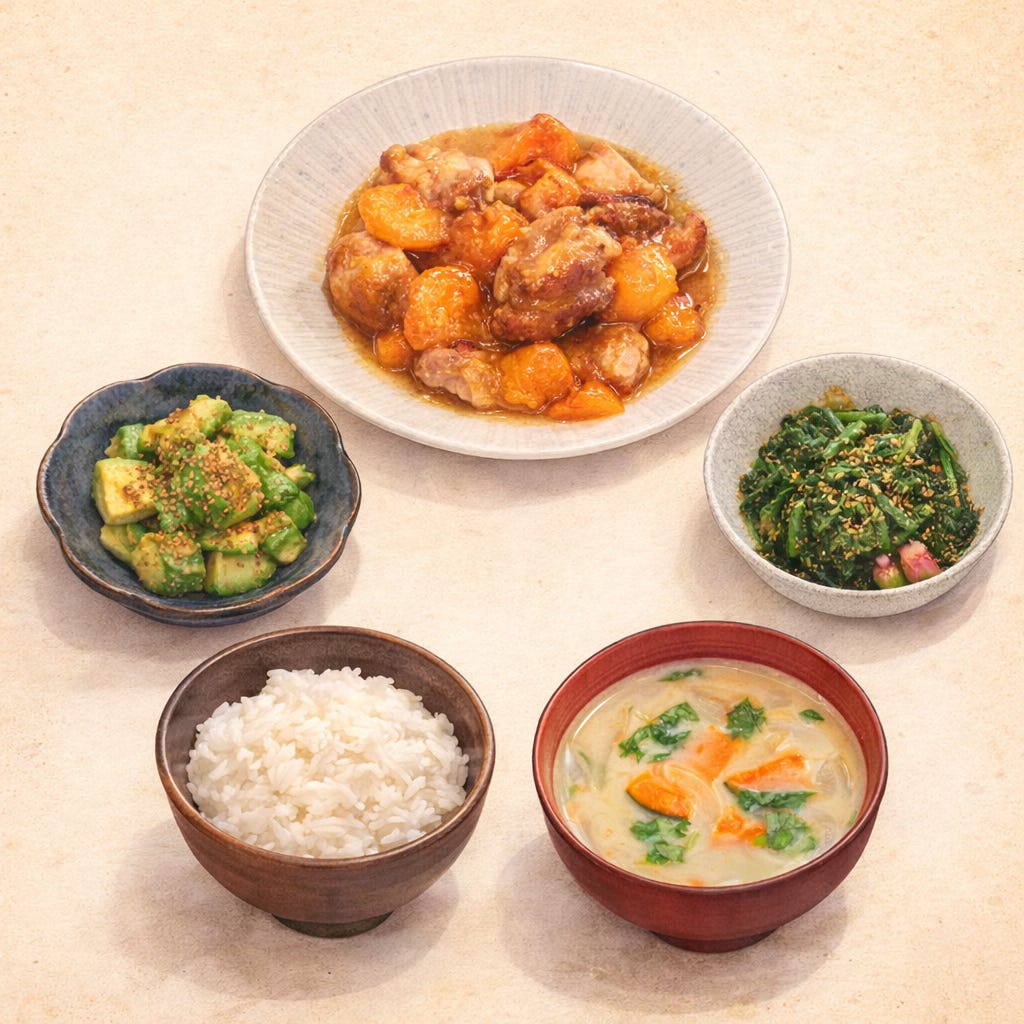
So what’s this all look like in practice? Here’s an example of a recent dinner I put together:
A more Western alternative might look like this:
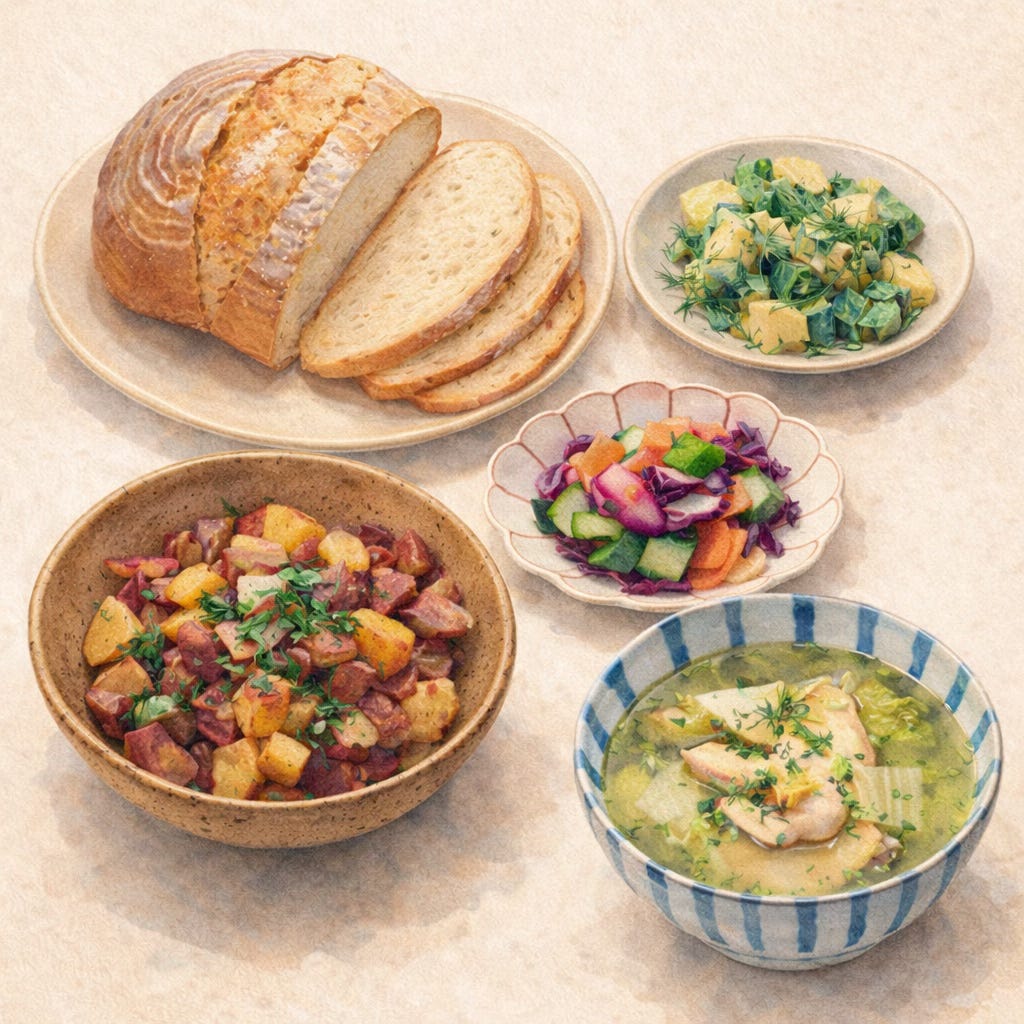
Crusty bread from the bakery
I know you’re probably thinking that this sounds like a lot of work, but the three dishes are meant to be simple. You can also supplement with leftovers from previous nights, or with something store-bought. In my household, we might cook two new dishes any given night, saving half of each for a future meal, and round out the table with one or two things from previous nights. It’s a flexible rotation that comes together in about half an hour.
If you want to try this, start simple. Pick one night this week and build the set: a staple, a warm soup, and three dishes prepared using different methods for contrast. Set aside part of a few dishes for the next day. Do it again. Over time, it becomes a routine that doesn’t require much thinking.
So here’s the question I want to leave you with: what if protein isn’t the centerpiece of dinner? Next week, we’ll explore the role of protein within the context of the meal. Continue reading with Part 2: The Japanese Approach to Protein
It took me several years to understand that rice was the main dish in Japanese meals. Hubby-san was never happy with my cooking unless it revolved around rice and miso soup. Raising our children in Japan, I cooked soup, rice and three dishes nearly every night (Tuesdays were ramen night), but I had no idea there was a name for this. Now the children are grown and gone, we live in the USA, and cooking for just the two of us is so different. Looking forward to reading your posts!
I don’t understand why soup disappeared from our dinner table. Is it the fact most people eat on the sofa with a plate in their lap? We always ate at the table until our children grew up and flew away now, just the two of us at a table feels so very lonely. So we’ve become couch diners.